
The Complete Men’s Vitality Guide for 2026
Last Updated: January 2026
Something’s changing in how men approach their health in 2025. The old playbook—ignore everything until something breaks, then scramble for a quick fix—isn’t cutting it anymore. Men in their 30s, 40s, and 50s are waking up to a simple truth: the stubborn belly fat, the afternoon brain fog, the extra bathroom trips at night, and the nagging worry about what comes next aren’t separate problems requiring separate solutions.
They’re connected. And understanding those connections changes everything.
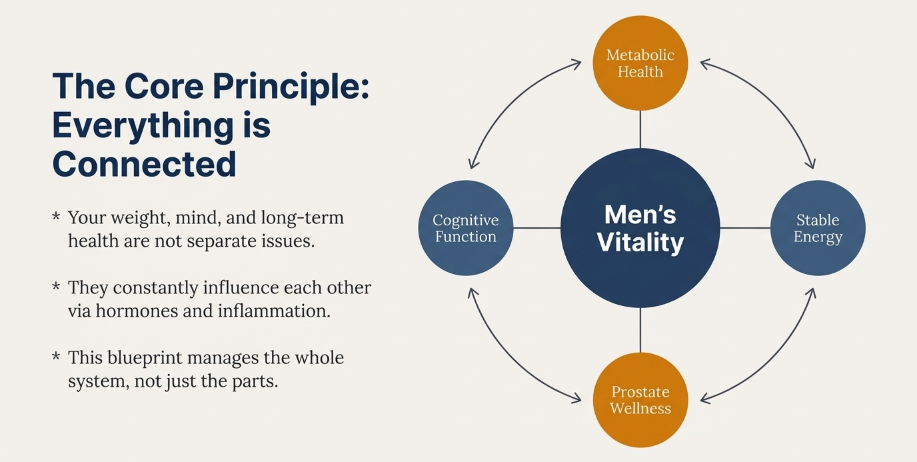
This isn’t about chasing perfection or comparing yourself to some Instagram fitness model. It’s about building a sustainable system that keeps you strong, sharp, and resilient as the years stack up. Because here’s what nobody tells you: your weight, blood sugar, mental clarity, and prostate health are all talking to each other through hormones, inflammation, and metabolic pathways. Change one element properly, and positive ripples spread throughout your entire system.
In this comprehensive guide, we’ll break down exactly how these four pillars of men’s vitality work together, why treating them in isolation fails, and what you can actually do to build lasting health without turning your life upside down.
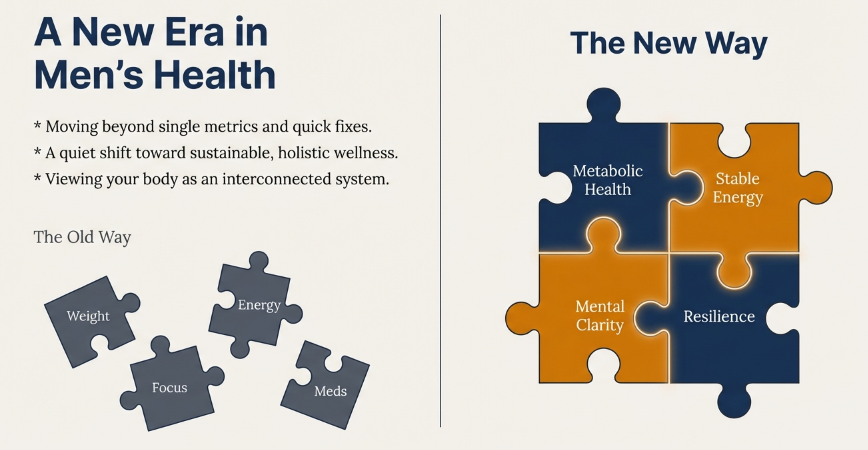
Why 2025 Demands a Different Approach: The Wake-Up Call
The traditional approach to men’s health has been reactive and compartmentalized. Weight gain? Just eat less. Tired? Drink more coffee. Memory issues? “You’re getting older.” Prostate concerns? “That’s just what happens to men.”
But modern men are rejecting this outdated thinking. They’ve watched their fathers struggle with preventable health issues. They’ve tried the crash diets that don’t last. They’ve experienced the frustration of treating symptoms while root causes go unaddressed.
What men are demanding now:
- Real answers over band-aids – Understanding why things are happening, not just masking symptoms
- Systems thinking, not isolated fixes – Recognizing how everything connects
- Prevention over crisis management – Addressing issues before they become serious
- Sustainable strategies that fit real life – No extreme protocols that can’t be maintained
This shift represents something profound: men taking ownership of their health trajectory instead of passively accepting decline as inevitable.
The Metabolic Foundation: Where Weight and Blood Sugar Meet
Let’s start with the most visible concern for most men: the weight that won’t budge, particularly around your midsection. You might be doing everything “right”—hitting the gym, cutting calories, avoiding obvious junk—yet that spare tire refuses to shrink.
Here’s why: weight management isn’t primarily about calories in versus calories out. It’s about metabolic health, and specifically about how your body handles insulin.
Understanding the Insulin Connection
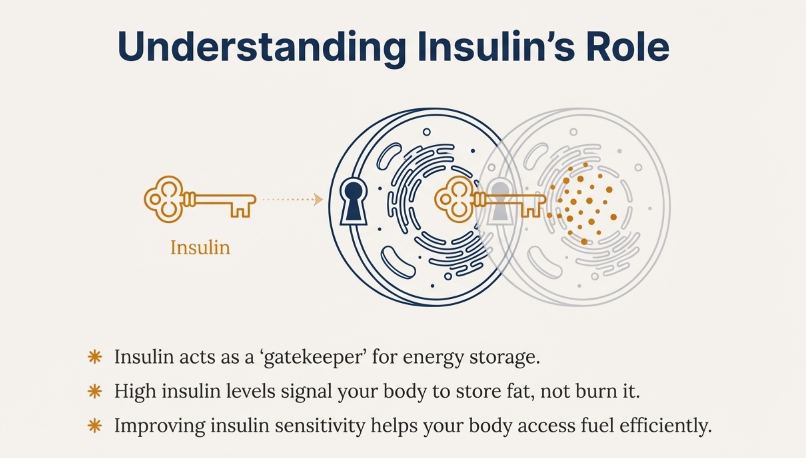
When you eat, your body releases insulin to shuttle glucose from your bloodstream into your cells for energy. This system works beautifully when you’re metabolically healthy. But over time, especially with the modern diet heavy in processed carbs and sugar, something starts to break down.
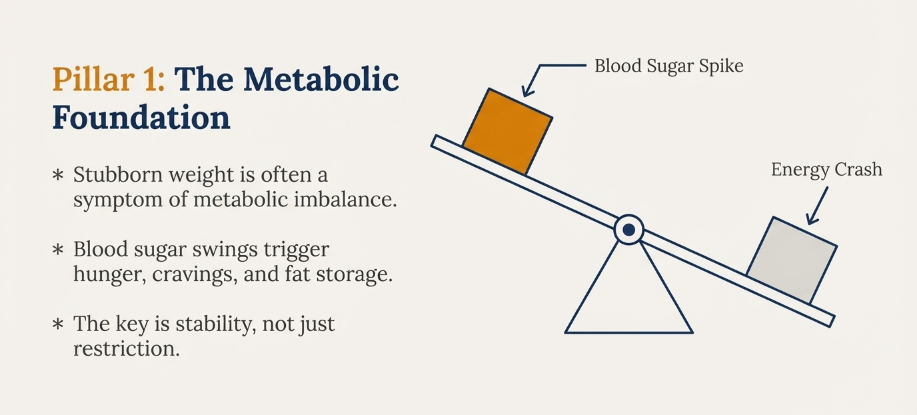
Your cells gradually become resistant to insulin’s signals. Your pancreas compensates by producing more insulin. Those elevated insulin levels do something critical: they send powerful messages to your fat cells to store energy rather than release it. Meanwhile, your blood sugar swings wildly—spiking after meals, then crashing hours later, triggering intense cravings and that desperate search for quick energy.
This is why you can restrict calories dramatically and still struggle to lose weight. You’re fighting against hormonal signals that are basically screaming at your body to hold onto every ounce of stored fat.
The Belly Fat Warning Sign
Weight gain around your midsection isn’t just aesthetically frustrating—it’s a metabolic red flag. Visceral fat (the kind that accumulates around your organs) doesn’t just sit there passively. It actively produces inflammatory compounds and hormones that further worsen insulin resistance, creating a vicious cycle that becomes harder to break the longer it continues.
Breaking the Cycle
The solution isn’t more willpower or stricter calorie counting. It’s addressing the underlying insulin resistance and blood sugar instability. When you stabilize your blood sugar through strategic food choices, proper meal timing, stress management, and targeted movement:
- Hunger signals normalize—you’re not constantly fighting cravings
- Energy levels stabilize throughout the day
- Your body becomes willing to access stored fat for fuel
- Weight management becomes dramatically easier
Think of it this way: you can’t out-discipline a broken metabolism. But fix the metabolism, and the weight often takes care of itself.
Want to dive deeper into blood sugar optimization? Explore our comprehensive Blood Sugar Control guide for evidence-based strategies, supplement recommendations, and lifestyle protocols that address metabolic health at its root.
The Energy-Weight-Performance Loop: Why This Matters Beyond the Scale
Here’s where it gets interesting. The same metabolic dysfunction driving weight gain is also sabotaging your energy, focus, and performance in every area of life.
The Afternoon Crash You’ve Normalized
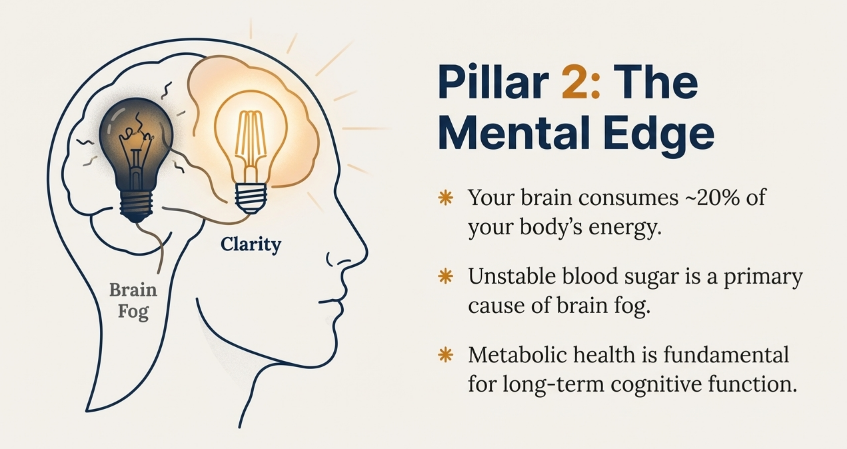
That 2 PM energy crater you fight with coffee or sugar? That’s not normal aging. It’s your blood sugar crashing after an insulin spike earlier in the day. Your brain—which burns about 20% of your body’s energy despite being only 2% of your body weight—is literally running out of fuel.
When you’re locked in this pattern:
- Decision-making deteriorates (you make poor food choices)
- Motivation evaporates (you skip the gym)
- Productivity plummets (work suffers)
- Mood darkens (irritability and stress increase)
And here’s the real kicker: stress and poor sleep further destabilize blood sugar and worsen insulin resistance, creating yet another reinforcing cycle.
The Hormonal Domino Effect
For men, metabolic dysfunction triggers a particularly problematic cascade. Insulin resistance tends to lower testosterone while simultaneously increasing aromatase, an enzyme that converts testosterone into estrogen. This means:
- Reduced muscle mass (muscle is metabolically active tissue that helps burn fat)
- Lower motivation and drive
- Decreased libido and sexual function
- Further weight gain, especially around the midsection
- Increased inflammation throughout your body
You can see how everything connects. What started as “just a few extra pounds” or “a little tired in the afternoons” snowballs into a comprehensive assault on male vitality.
Reclaiming Your Energy
When you address metabolic health properly—stabilizing blood sugar, improving insulin sensitivity, managing stress, prioritizing sleep—you don’t just lose weight. You reclaim energy, mental clarity, motivation, and performance across every domain of life.
Discover natural solutions for weight management in our Weight Loss hub, where we cover metabolic optimization, sustainable fat loss strategies, and the tools that support long-term success without extreme measures.
The Mental Clarity Connection: Protecting Your Cognitive Edge
Most men don’t associate weight gain or blood sugar issues with brain health. That’s a mistake. The connection between metabolic dysfunction and cognitive decline is well-established and increasingly concerning.
How Blood Sugar Instability Affects Your Brain
Your brain runs on glucose. When blood sugar swings wildly throughout the day, your brain experiences those fluctuations directly. The result?
- Brain fog and difficulty concentrating
- Slower information processing
- Poor memory formation and recall
- Reduced problem-solving capacity
- Mood instability and irritability
This isn’t just inconvenient—it’s the early warning system for potential cognitive decline later in life. Research consistently shows that insulin resistance and chronic inflammation (both consequences of poor metabolic health) significantly increase the risk of cognitive impairment and dementia as you age.
The Inflammation Factor
Remember that visceral fat we talked about? It’s constantly pumping out inflammatory molecules called cytokines. These don’t stay localized—they circulate throughout your bloodstream, including into your brain.
Chronic low-grade inflammation in brain tissue interferes with:
- Communication between neurons
- Formation of new neural connections
- Memory consolidation during sleep
- Mood regulation and emotional stability
Think about it: when you feel inflamed, foggy, and tired, are you making good decisions about food, exercise, and stress management? Probably not. Which perpetuates the very patterns causing the problem.
Building Cognitive Resilience Now
The practices that support metabolic health are the same ones that protect your brain:
Stable blood sugar = steady fuel delivery to brain cells
Quality sleep = memory consolidation and brain detoxification
Regular movement = increased blood flow and new neural connections
Stress management = reduced cortisol interference with memory
Social connection = cognitive stimulation and emotional resilience
Here’s the crucial insight: the habits you build in your 30s, 40s, and 50s are creating the cognitive reserve you’ll draw on in your 70s and 80s. Protecting your mental edge isn’t about preventing some distant future problem—it’s about optimizing your focus, clarity, and performance right now while simultaneously investing in your long-term cognitive health.
Ready to sharpen your mental edge? Visit our Mind Sharp hub for strategies on enhancing cognitive function, protecting brain health as you age, and understanding the gut-brain-metabolism connection that influences everything from mood to memory.
The Prostate Factor: What Every Man Over 30 Needs to Know
Let’s address the topic most men avoid until it becomes impossible to ignore: prostate health. This walnut-sized gland doesn’t get much attention until it starts causing problems—frequent nighttime bathroom trips, weak stream, that frustrating feeling of incomplete bladder emptying.
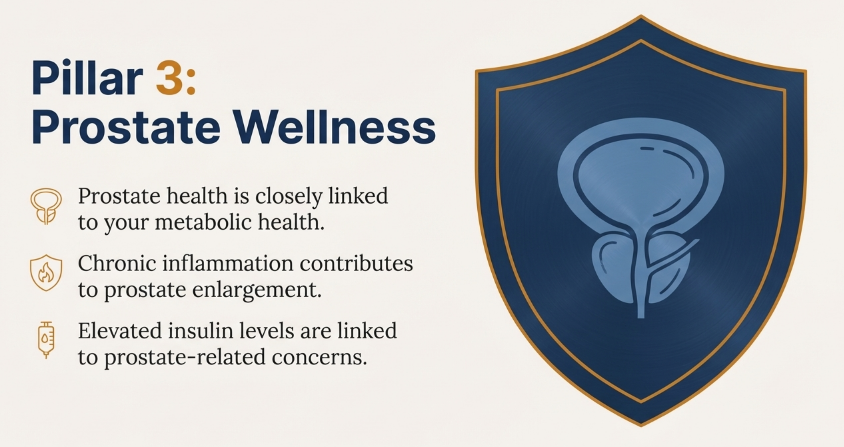
But here’s what you need to understand: prostate health is intimately connected to the same metabolic factors we’ve been discussing.
The Weight-Prostate Connection
Excess body weight, particularly visceral fat, doesn’t just affect your waistline. It significantly impacts prostate health through multiple pathways:
Hormonal Disruption: That aromatase enzyme converting testosterone to estrogen? It’s concentrated in fat tissue. Higher estrogen levels and lower testosterone create hormonal imbalances that promote prostate enlargement.
Insulin and Growth Factors: Elevated insulin levels and insulin-like growth factors (consequences of insulin resistance) stimulate prostate tissue growth. Men with metabolic syndrome have significantly higher rates of prostate enlargement and related concerns.
Chronic Inflammation: Those inflammatory cytokines from visceral fat don’t just affect your brain—they also contribute to prostate inflammation and enlargement, worsening urinary symptoms and increasing long-term health risks.
Why This Matters Now, Not Later
Most men think prostate issues are something to worry about “when you’re old.” But the changes that lead to prostate problems in your 60s and 70s are being established right now. Benign prostatic hyperplasia (prostate enlargement) begins in many men as early as their 30s and 40s—it just takes years before symptoms become noticeable.
By addressing metabolic health, managing weight, reducing inflammation, and maintaining hormonal balance now, you’re dramatically improving your odds of comfortable urinary function and reduced prostate concerns decades from now.
Protective Strategies That Work
Beyond the metabolic factors we’ve covered, specific nutrients and lifestyle choices support prostate health:
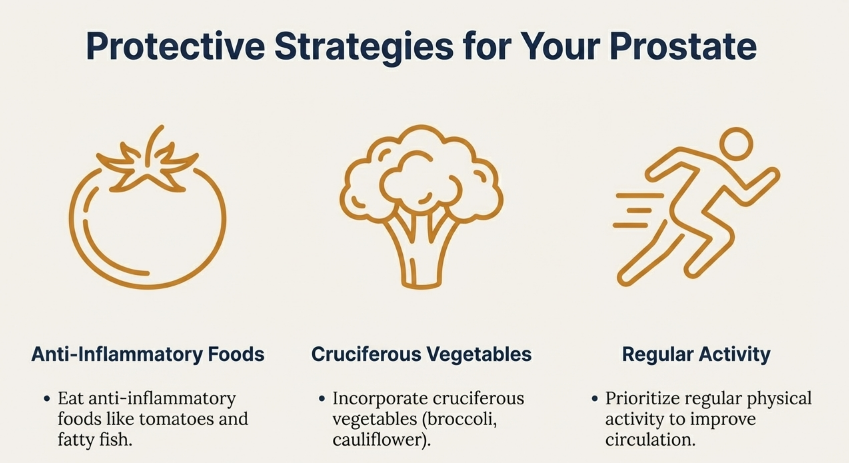
- Dietary patterns: Emphasizing vegetables (especially cruciferous ones like broccoli), healthy fats (particularly omega-3s), and lycopene-rich foods like tomatoes
- Limiting inflammatory triggers: Reducing processed meats, excess dairy, and foods that spike blood sugar
- Regular movement: Exercise improves circulation, supports hormone balance, and reduces inflammation
- Stress management: High cortisol negatively impacts prostate health through multiple pathways
Some men also find benefit in specific natural compounds traditionally used for prostate support—saw palmetto, beta-sitosterol, pygeum, and stinging nettle root among them.
The Screening Conversation
Finally, don’t avoid prostate health conversations with your doctor because of embarrassment or fear. Regular monitoring—PSA tests, digital rectal exams, and discussions about any urinary changes—allows for early detection when issues are most manageable.
Want comprehensive guidance on protecting your prostate? Explore our Prostate Care section for evidence-based approaches to testosterone optimization, prostate protection, and aging powerfully.
The Integrated System: Why Everything Connects to Everything
Here’s where it all comes together. Let’s walk through a typical scenario that demonstrates how these four pillars interact:
Meet David, 43 years old:
Over the past decade, he’s gradually gained 25 pounds, mostly around his midsection. He chalks it up to “getting older” and being busy with work and family. He experiences afternoon energy crashes that he manages with coffee and snacks. His sleep quality has declined—partly because he wakes up 2-3 times per night to urinate. At work, he sometimes struggles to focus during important meetings and notices his memory isn’t as sharp as it used to be.
The conventional approach might treat these as separate issues:
- Weight gain → diet and exercise advice
- Energy crashes → maybe medication for depression or just “push through it”
- Nighttime urination → prostate medication
- Memory concerns → “that’s normal aging” or neurological testing
The integrated approach sees a different picture:
David’s weight gain, particularly around the middle, signals insulin resistance. This insulin resistance is causing blood sugar instability—explaining those energy crashes. The blood sugar swings and chronic inflammation from visceral fat are affecting his brain function, causing the focus and memory issues. The insulin resistance is also promoting prostate enlargement through hormonal and inflammatory pathways, leading to those nighttime bathroom trips. Poor sleep from frequent urination further worsens insulin resistance and blood sugar control, while also impairing cognitive function and making weight loss harder.
Everything connects to everything else.
The Power of Systems Thinking
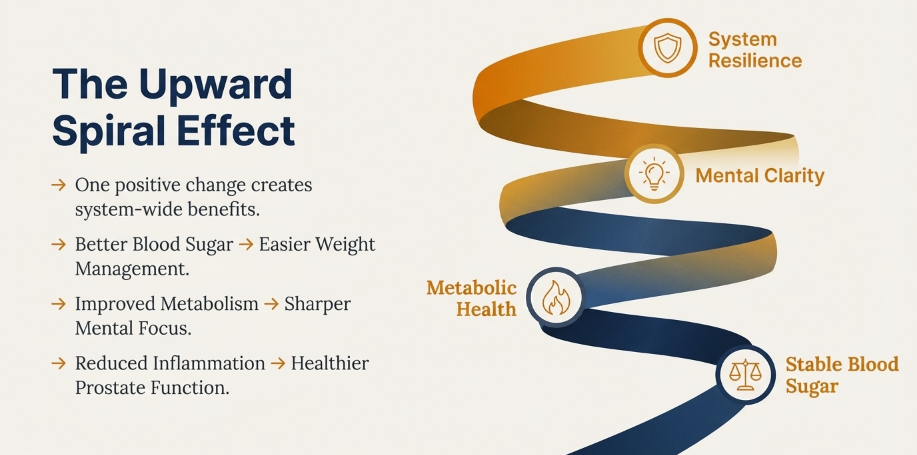
When you address the root metabolic dysfunction—stabilizing blood sugar, improving insulin sensitivity, reducing inflammation, optimizing hormones—you create positive ripples throughout the entire system:
✅ Weight management becomes easier
✅ Energy stabilizes throughout the day
✅ Mental clarity improves
✅ Sleep quality enhances
✅ Prostate inflammation decreases
✅ Mood and motivation improve
✅ Better choices become easier to make
Each improvement reinforces the others, creating an upward spiral toward better health.
Why Isolated Fixes Fail
Conversely, trying to address these issues in isolation often leads to disappointing results:
- You can restrict calories severely, but if insulin resistance continues, weight loss will be difficult and unsustainable
- You can take supplements for memory, but if chronic blood sugar instability continues bathing your brain in inflammatory molecules, cognitive protection will be limited
- You can take medication for prostate symptoms, but if the underlying metabolic dysfunction and inflammation continue, you’re managing symptoms rather than addressing root causes
This explains why so many men feel frustrated with their health despite “doing everything right.” They’re applying solutions to symptoms while the underlying system remains broken.
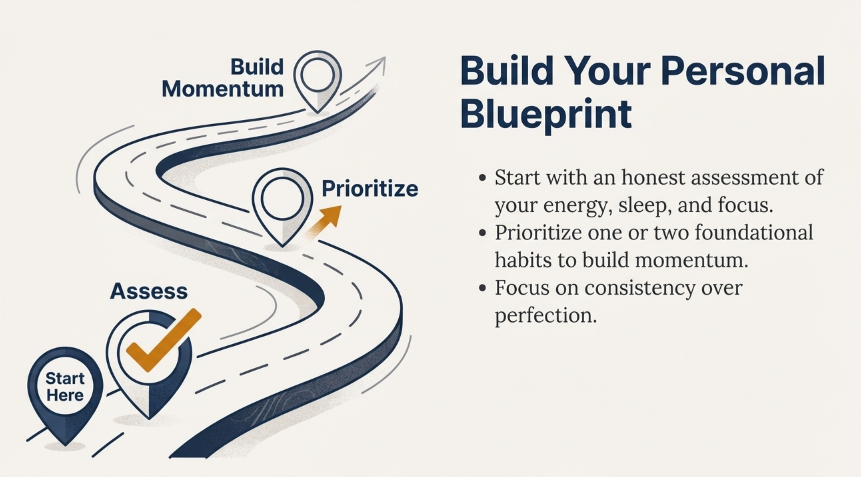
Building Your Personal Vitality System: Practical Implementation
Understanding connections is valuable, but knowledge without application doesn’t change outcomes. Here’s how to translate these principles into daily practices that fit your real life.
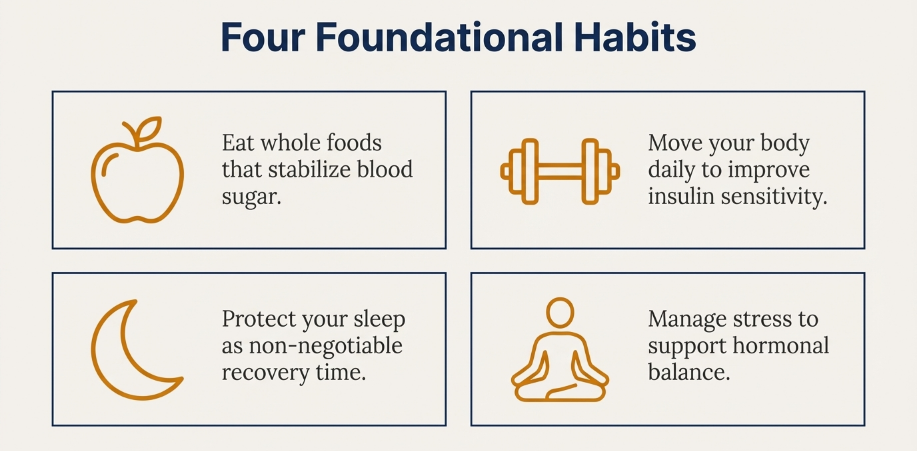
Start With Foundation Over Optimization
The temptation is to look for the perfect supplement stack, the ideal workout split, or the most cutting-edge biohack. Resist that urge. The fundamentals deliver 80% of results:
Blood Sugar Stability:
- Prioritize protein and healthy fats at every meal
- Include fiber-rich vegetables to slow glucose absorption
- Minimize processed carbs and added sugars
- Consider strategic carb timing (after workouts when insulin sensitivity is highest)
- Never eat carbs alone—always pair with protein or fat
Movement That Matters:
- Resistance training 2-3x per week (builds insulin-sensitive muscle)
- Daily walking or low-intensity movement (improves metabolic flexibility)
- Occasional higher-intensity work (boosts metabolism and hormones)
- Consistency matters more than intensity
Sleep Protection:
- 7-8 hours minimum for most men
- Cool, dark, quiet environment
- Consistent schedule (even on weekends)
- Limit blue light exposure 2 hours before bed
- Manage that nighttime urination by limiting fluids after 7 PM and addressing prostate health
Stress Management:
- Daily practice (meditation, breathwork, nature walks)
- Social connection and meaningful relationships
- Creative outlets or engaging hobbies
- Setting boundaries around work and technology
The 30-Day Reset Protocol
If you’re ready to break the metabolic dysfunction cycle, commit to 30 days of foundation-building:
Week 1-2: Blood Sugar Stabilization
- Eliminate obvious processed foods and added sugars
- Eat protein within an hour of waking
- Include protein and vegetables at every meal
- Track your energy levels throughout the day
Week 3-4: Movement and Sleep
- Add 3 resistance training sessions
- Get 8,000+ steps daily
- Establish consistent sleep schedule
- Begin stress management practice
Beyond 30 Days:
- Continue refining based on what you notice
- Consider targeted supplementation for specific concerns
- Track metrics that matter (waist circumference, energy levels, sleep quality)
- Adjust as needed while maintaining consistency
When to Consider Targeted Support
Once your foundation is solid, specific supplements or natural formulas can enhance results:
For Metabolic Health: Ingredients like berberine, chromium, alpha-lipoic acid, and cinnamon extract support healthy blood sugar metabolism
For Cognitive Function: Omega-3 fatty acids, B vitamins, and compounds supporting mitochondrial function
For Prostate Health: Saw palmetto, beta-sitosterol, pygeum, and nutrients supporting healthy hormone metabolism
For General Vitality: Quality multivitamin, vitamin D3 (most men are deficient), magnesium for sleep and stress
Remember: supplements enhance a solid foundation. They don’t replace one.
Tracking What Matters
Forget obsessing over the scale daily. Track metrics that actually reflect systemic health:
- Waist circumference (better indicator of metabolic health than weight)
- Fasting blood glucose (ideally under 95 mg/dL)
- Energy patterns (stable vs. crashes)
- Sleep quality (hours and how you feel)
- Mental clarity (focus and memory)
- Urinary function (frequency, flow, nighttime trips)
- Mood and motivation (overall sense of wellbeing)
These indicators tell you whether your interventions are working far better than any single number.

Age-Specific Strategies: Your Vitality Timeline
Men in Their 30s: Building the Foundation
This is your window for establishing habits that will serve you for decades. Metabolism is starting to slow, but you still have significant hormonal advantages.
Primary Focus:
- Build muscle mass (easiest time to do this)
- Establish consistent healthy eating patterns
- Develop stress management skills
- Prioritize sleep (recovery is still robust)
- Avoid accumulating visceral fat
Key Insight: The metabolic health you build now determines how gracefully you age. Start prevention before problems appear.
Men in Their 40s: Course Correction
You’re likely noticing changes—weight gain despite not changing habits, energy that’s not quite what it was, maybe early signs of prostate changes. This is the critical intervention decade.
Primary Focus:
- Address any insulin resistance aggressively
- Protect testosterone levels naturally
- Implement serious stress management
- Get comprehensive health screening
- Focus on sustainable fat loss if needed
Key Insight: This is when ignoring problems becomes costly. Small interventions now prevent major issues later.
Men in Their 50s and Beyond: Optimization and Protection
You’re playing the long game now—maintaining function, protecting against decline, and optimizing quality of life for the decades ahead.
Primary Focus:
- Maintain muscle mass at all costs
- Keep inflammation as low as possible
- Protect cognitive function aggressively
- Monitor and support prostate health
- Prioritize metabolic markers
Key Insight: You can’t out-train or out-supplement a poor foundation. Consistency with basics matters more than cutting-edge optimization.
Common Mistakes That Sabotage Progress
Mistake #1: Treating Symptoms Instead of Systems
Taking medication for every symptom while ignoring metabolic dysfunction is like bailing water from a sinking boat without fixing the hole. Address root causes first.
Mistake #2: All-or-Nothing Thinking
“I’ll start my health overhaul on Monday” rarely works. Small, consistent changes compound far better than dramatic overhauls that can’t be sustained.
Mistake #3: Ignoring Sleep and Stress
You cannot out-diet or out-exercise chronic sleep deprivation and unmanaged stress. These aren’t optional—they’re foundational.
Mistake #4: Comparing Yourself to Your 25-Year-Old Self
Your body has changed. Approaches that worked in your 20s (extreme calorie restriction, excessive cardio, high stress tolerance) become counterproductive after 30. Work with your current biology, not against it.
Mistake #5: Waiting for Rock Bottom
Don’t wait until you’re diagnosed with type 2 diabetes, need prostate surgery, or experience serious cognitive decline. Prevention is exponentially easier than reversal.
Mistake #6: Seeking Magic Pills Over Fundamentals
No supplement, medication, or biohack can compensate for poor diet, sedentary lifestyle, chronic stress, and sleep deprivation. Foundation first, optimization second.
Your Action Plan: Starting Today
You don’t need to overhaul your entire life tomorrow. Here’s your simple starting point:
This Week:
- Assess honestly – Where are you now? Energy levels? Weight? Mental clarity? Sleep quality? Urinary function?
- Choose one foundation – Pick the area where improvement would create the biggest positive ripple:
- Blood sugar stability → Start with protein-rich breakfast
- Sleep quality → Set consistent bedtime
- Movement → Add daily 20-minute walk
- Stress → Begin 10-minute morning meditation
- Track one metric – Choose something meaningful and track it for 7 days to establish baseline
This Month:
- Add second foundation – Once first habit is automatic, layer in the next priority
- Eliminate one saboteur – Remove the obvious problem (sugar-heavy snacks, late-night screen time, skipping breakfast)
- Get baseline labs – Fasting glucose, HbA1c, lipid panel, PSA (if over 40), testosterone if indicated
This Quarter:
- Establish full foundation – Blood sugar stability, consistent movement, quality sleep, stress management
- Consider targeted support – Research supplements or natural formulas for specific concerns
- Reassess metrics – Compare to baseline and adjust strategy based on results
This Year:
- Refine and optimize – Fine-tune based on what works for your body
- Build resilience – Focus on sustainable practices that fit your real life
- Inspire others – Share what you’ve learned with men in your circle
Final Thoughts: The Long Game of Male Vitality
Here’s the truth that nobody wants to hear but everyone needs to understand: there are no shortcuts to sustainable vitality. The supplement promising “effortless fat loss” is lying. The workout program guaranteeing “get shredded in 6 weeks” is selling fantasy. The biohack claiming to “reverse aging” is exploiting hope.
But here’s the better truth: you don’t need shortcuts when you understand the system.
When you recognize that your weight, blood sugar, mental clarity, and prostate health are all expressions of your underlying metabolic health, hormonal balance, and inflammatory state, you gain leverage. Instead of fighting multiple separate battles, you address the core patterns that affect everything.
This isn’t about perfection. It’s about building sustainable practices that support your vitality today while investing in your resilience tomorrow. It’s about making informed choices that work with your biology rather than against it. It’s about playing the long game instead of chasing quick fixes that inevitably fail.
The Ripple Effect
When you commit to this integrated approach:
- You don’t just lose weight—you reclaim energy and confidence
- You don’t just stabilize blood sugar—you protect your brain and future
- You don’t just support prostate health—you optimize hormonal balance and sexual function
- You don’t just extend lifespan—you enhance the quality of every year
And here’s the unexpected benefit: when you feel better, you show up better—as a professional, partner, father, friend. Your health isn’t separate from the rest of your life. It’s the foundation for everything else.
Your Next Steps
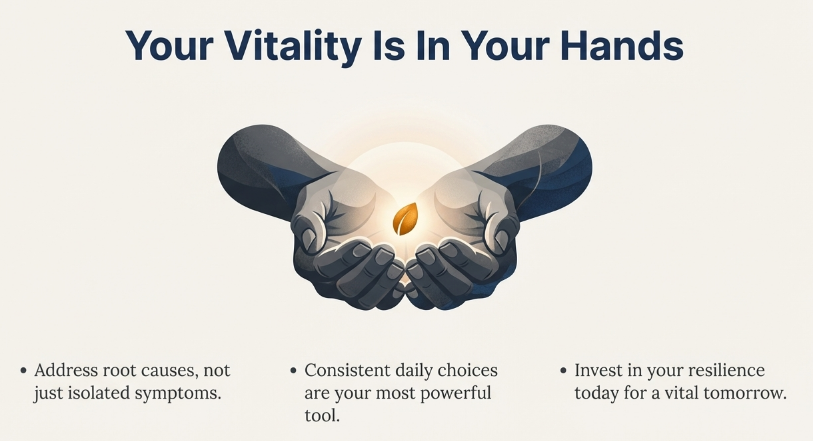
This guide has given you the framework. Now it’s time to dive deeper into the specific areas where you need the most support:
👉 Struggling with stubborn weight and metabolic issues? Explore our Weight Loss hub for comprehensive strategies, supplement recommendations, and sustainable fat loss protocols.
👉 Concerned about blood sugar balance? Visit our Blood Sugar Control section for evidence-based approaches to optimizing insulin sensitivity and preventing metabolic disease.
👉 Want to protect and enhance cognitive function? Check out our Mind Sharp resources for brain health strategies, memory enhancement techniques, and neuroprotective lifestyle practices.
👉 Ready to optimize prostate health and male vitality? Dive into our Prostate Care hub for testosterone optimization, prostate protection, and strategies for aging powerfully.
The Decision Is Yours
You can continue on your current path—accepting gradual decline as inevitable, treating symptoms as they arise, and hoping for the best.
Or you can take ownership of your health trajectory right now. Build the foundation. Address the systems. Create the upward spiral toward lasting vitality.
The choice has always been yours. The only question is: when will you make it?
Welcome to a smarter approach to men’s health. Welcome to sustainable vitality. Welcome to taking control of your future.
Disclaimer: This article is for educational and informational purposes only and is not intended as medical advice. Always consult with a qualified healthcare professional before making changes to your diet, exercise routine, or supplement regimen, especially if you have existing health conditions or take medications. Individual results may vary.